7 Best Practices for School Facility Maintenance
Last Updated: November 21, 2026
Quick Summary
School facility maintenance is the ongoing care of a school's buildings, systems and grounds, built on planned inspections rather than emergency repairs. Planned maintenance catches small problems early and can reduce the cost of emergency repairs. Inspections run on a fixed cadence, from daily walkthroughs to annual system testing.
- Preventive maintenance spreads costs across the year and avoids crisis spending on failures like a boiler breakdown.
- Inspections follow a schedule from daily checks to annual testing of boilers, fire alarms and elevators.
- Rate each finding from 1 to 5 and pair it with a priority, fixing safety-critical items the same day.
- Assign every inspection finding to a named person with a completion date before the inspector leaves.
- Recurring water intrusion, HVAC and pest problems cause the most damage and should go into the work-order system.
Table of Contents
- Why Preventive Maintenance Beats Reactive Repairs in Schools
- School Maintenance Checklist for Routine Inspections
- Common School Facilities Problems and Solutions
- Planning Your Next Step for School Facility Maintenance Cost Control
- Frequently Asked Questions
Why Preventive Maintenance Beats Reactive Repairs in Schools
School facility maintenance keeps buildings, systems and grounds safe and usable. Planned maintenance can reduce the cost of emergency repairs by catching small problems before they become larger failures. Read a complete guide to commercial facility maintenance for schools for more on planned programs.
Reactive repairs feel cheaper in the moment, but a failed boiler on a January morning costs more and may close classrooms. Preventive maintenance spreads the cost across the year.
- Schedule filter changes and equipment checks before problems start
- Track repairs so you can spot systems that fail often
- Budget for planned replacements instead of crisis spending
School Maintenance Checklist for Routine Inspections
A routine inspection catches small issues before they grow. Many schools inspect on a fixed cadence by system, since a single annual walkthrough can miss seasonal failures. Assign each asset a frequency band and keep one checklist per band.
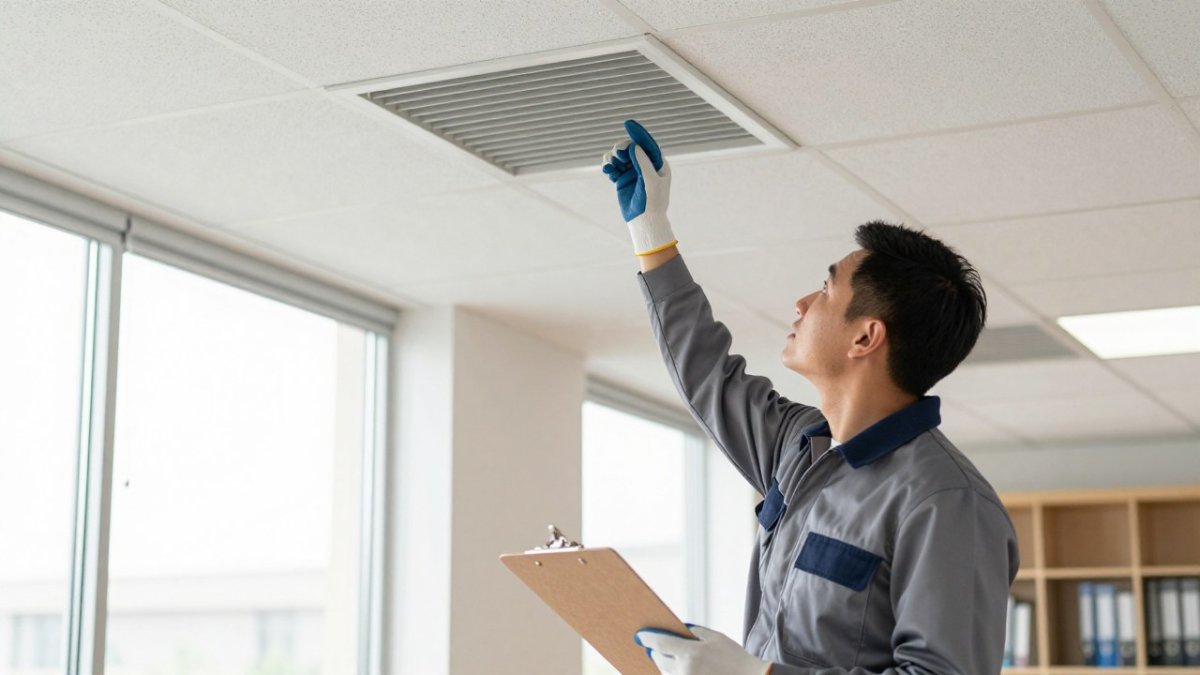
- Daily: custodial walkthroughs for restrooms, entry doors, lighting outages, and trip hazards; playground surface checks before recess
- Weekly: roof drains and scuppers, mechanical room leaks and noise, exit sign and emergency light spot checks
- Monthly: HVAC filter loading, belt condition, thermostat calibration, fire extinguisher pressure, eyewash stations
- Quarterly: roof membrane and flashing, gutters, door hardware and closers, parking lot and walkway surfaces, irrigation and exterior lighting
- Annually or seasonally: boiler and chiller startup, fire alarm and sprinkler testing with the local authority having jurisdiction, elevator inspection, playground equipment audit, accessibility route review
Start with the systems people notice first. HVAC affects comfort and air quality daily, so findings should feed into a work-order queue. Learn which HVAC failures are true emergencies needing immediate professional repair.
Log each finding with a date, location, asset ID, and a 1-to-5 condition rating (1 = failed, 5 = like new) to compare buildings and justify budget requests. Pair the rating with a priority: safety-critical items get fixed or barricaded the same day, functional items go into the next scheduled window, and cosmetic items wait for a planned project.
Watch out: an inspection that produces a list but no owner and no due date becomes a record of known problems rather than a maintenance program. Assign every finding to a person and a completion date before the inspector leaves.
Condition assessments differ from routine inspections: an inspection catches what is broken now, while a condition assessment estimates remaining useful life so you can plan replacement. Major assets such as roofs, boilers, chillers, paving, and the building envelope are often assessed periodically and the results used for capital planning. That distinction matters before a school board: operating dollars fix what failed, capital dollars replace what is about to fail.
The article sets out a fixed inspection cadence by system, so the frequency bands are easy to scan at a glance.
| Frequency | Example items to inspect |
|---|---|
| Daily | Restrooms, entry doors, lighting outages, trip hazards, playground surfaces |
| Weekly | Roof drains and scuppers, mechanical room leaks, exit and emergency lights |
| Monthly | HVAC filters, belt condition, thermostat calibration, fire extinguishers, eyewash stations |
| Quarterly | Roof membrane and flashing, gutters, door hardware, parking and walkways, irrigation |
| Annually or seasonally | Boiler and chiller startup, fire alarm and sprinkler testing, elevators, playground equipment, accessibility routes |
Common School Facilities Problems and Solutions
School facility problems often recur from year to year. The ones that cause the most damage are rarely dramatic; they are slow, recurring issues deferred because no single failure looks urgent.
Water intrusion is the most expensive recurring problem. A small roof leak can spread into ceiling tiles and walls within weeks, and moisture reaching insulation or drywall creates conditions for mold. Check after heavy rain and fix flashing or gutters right away. Indoors, condensate lines, supply lines under sinks, and ice machines are common slow leaks that show up as stained ceiling tiles before anyone reports a puddle.
HVAC problems also show up often. Dirty filters restrict airflow and strain equipment, and replacing them on schedule is one of the cheapest fixes available. Beyond filters, check belt tension, coil cleanliness, and economizer dampers, because a stuck economizer wastes energy quietly and shows up only on the utility bill.
Pest, water, and environmental hazards deserve their own procedures rather than a line on a checklist. Integrated pest management generally emphasizes exclusion and sanitation before pesticide use. Seal gaps around doors, pipe penetrations, and loading docks; keep dumpsters away from entries; and log every sighting to spot patterns.
Moisture control is the front line of mold prevention. Keep indoor relative humidity within the range the building's mechanical design targets, fix leaks promptly, and dry wet materials before closing up walls. After a flood or long-running leak, a moisture meter reading at the time of repair beats a visual check later.
Hazardous materials handling is a separate obligation. Asbestos-containing materials in older buildings, lead paint, and science-lab chemicals each have their own handling and disposal rules, and maintenance staff should know which materials fall into those categories before they cut, drill, or disturb them. Label storage areas, keep safety data sheets accessible, and train staff on spill response.
Watch out: pest and moisture problems treated as custodial complaints rather than maintenance findings tend to recur every year. Route sightings and leak reports into the same work-order system as HVAC and electrical calls so patterns become visible.
Planning Your Next Step for School Facility Maintenance Cost Control
Cost control starts with a written maintenance plan. List every system, its age, and when it was last serviced. Then rank the work by safety risk and cost of failure.
Many schools choose between in-house crews and outside contractors. A service agreement can lock in response times and pricing terms. Pricing depends on building size, scope and schedule, so request a quote from International Construction Solutions Ltd or your preferred provider to compare current options.
Start with a short list of priorities for the next budget year. Pick the two or three systems most likely to fail, and schedule their inspections first.
Frequently Asked Questions
How often should school facilities be inspected?
School facility teams often schedule routine inspections monthly for high-use items such as HVAC filters, fire safety equipment, restroom fixtures and playground surfaces. Building envelope items like roofs, gutters and exterior doors are typically reviewed each season, and major systems such as boilers, electrical panels and elevators get a full condition assessment at least once a year. Logging each inspection in a shared asset register makes it easier to spot patterns, prioritize repairs and show auditors or school boards that the district is managing its buildings proactively.
What should be included in a school maintenance checklist?
A practical school maintenance checklist covers HVAC equipment and filters, plumbing and restrooms, lighting and electrical panels, roofs and drainage, doors and locks, fire protection and emergency exits, playground equipment, and grounds. Each line item should list the task, the frequency, the responsible person and the date completed. Include accessibility checks such as ramp condition, door opening force and signage, since ADA compliance issues are easy to miss during busy school years. Review the checklist at the start of each term to adjust for seasonal risks like winter freezes or spring storm damage.
How can schools reduce facility maintenance costs?
Schools usually cut costs by shifting from reactive repairs to preventive maintenance, which catches small problems before they cause emergency calls and downtime. Track work orders by category to find repeat failures, then budget for replacing aging equipment before it breaks. Group contractor services under agreements where pricing depends on scope, frequency and response time, and ask vendors for detailed quotes that show labor, materials and scheduling assumptions. Current pricing depends on the size of the facility, the systems involved and the service schedule, so request a site-specific quote from International Construction Solutions Ltd.
